
Virtual Accounting vs. Traditional Bookkeeping: Which Fits Your Growing Business?

If you only need transactions categorized and accounts reconciled, a traditional bookkeeper can be enough. If you want current numbers, tax planning during the year, and guidance as income grows, virtual accounting usually fits better, especially for remote, project-based, or creator businesses.
At a glance
- Access: traditional bookkeeping, office visits, document drop-offs; virtual accounting, secure online portal, cloud software.
- Reporting: traditional bookkeeping, monthly reports after close; virtual accounting, current data through bank feeds, plus monthly close.
- Tax: traditional bookkeeping, mostly at filing time; virtual accounting, planning during the year.
- Guidance: traditional bookkeeping, clean records; virtual accounting, clean records plus decisions.
- Best for: traditional bookkeeping, local, paper-heavy, cash businesses; virtual accounting, remote, digital, multi-income businesses.
The real difference is guidance, not location
Both models can reconcile accounts, categorize expenses, and produce financial statements. The difference is what happens next. Traditional bookkeeping is usually task-focused: keep the records clean. Virtual accounting is usually system-focused: connected cloud software, such as QuickBooks Online, plus someone who helps you interpret the numbers.
Current numbers beat month-old reports
A report delivered weeks after month-end describes a business that may have already changed. Bank feeds and connected payment platforms give a more current view of cash, income, and receivables. The data still needs review, but it gives you a faster starting point for decisions about hiring, pricing, and owner pay.
Tax planning should happen during the year
Self-employed owners may need quarterly estimated payments, and the IRS can charge penalties when they are too low or late. A partner who watches income through the year can flag a shortfall early, when you still have options. See The Q4 Tax Planning Checklist for what to review before December 31.
Multiple income streams need one view
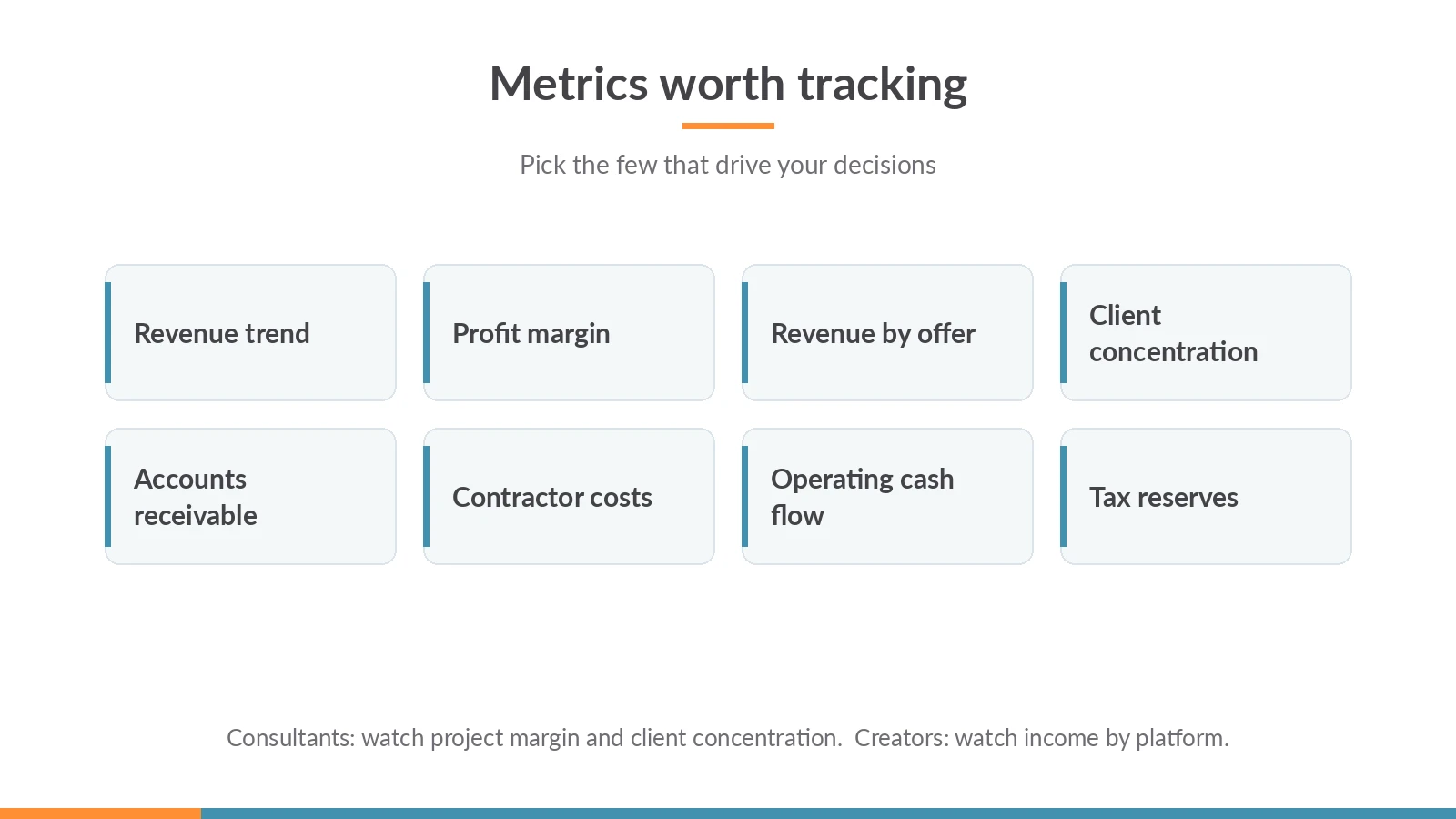
Creators juggle platform payouts, sponsorships, affiliate commissions, and digital product sales. Consultants need margin by offer, client concentration, and contractor costs. When everything lands in one set of books, you can answer the questions that matter:
- Which offer or income stream is actually the most profitable?
- How many months of operating cash do you have?
- How much can you safely pay yourself after taxes?
When traditional bookkeeping is the better choice
- Your business handles significant cash or paper transactions.
- You strongly prefer frequent in-person meetings.
- You only need basic bookkeeping and no ongoing guidance.
The right provider is the one that matches your workflow and complexity, not the one with the lowest monthly price.
A common scenario
Illustrative example, not a specific client.
A solo consultant has a bookkeeper who reconciles the accounts every quarter. The books are accurate, but the reports arrive months after the fact. When a large client pays 60 days late, the owner discovers the cash gap only when a contractor invoice comes due. Nothing in the books was wrong; they just could not answer the question in time.
What we'd do
- Write down three decisions you expect to make in the next six months, such as hiring, raising prices, or setting owner pay.
- Check whether your current books can answer each one with numbers you trust.
- Choose a provider based on that gap, not on price alone.
Frequently asked questions
What does virtual accounting usually include?
It varies by firm. Common services include monthly bookkeeping and reconciliation, financial statements, tax preparation and planning, cash flow projections, and advisory reviews. Ask for a written scope before you start.
How should documents be shared with a virtual firm?
Through a secure client portal rather than regular email. Ask any provider how documents are stored and who has access to them.
Not sure which model fits your business?
Book a discovery callSources
This article is for general information only and is not tax or legal advice. Tax rules depend on your circumstances and may change. Talk with a qualified tax professional before acting on it.